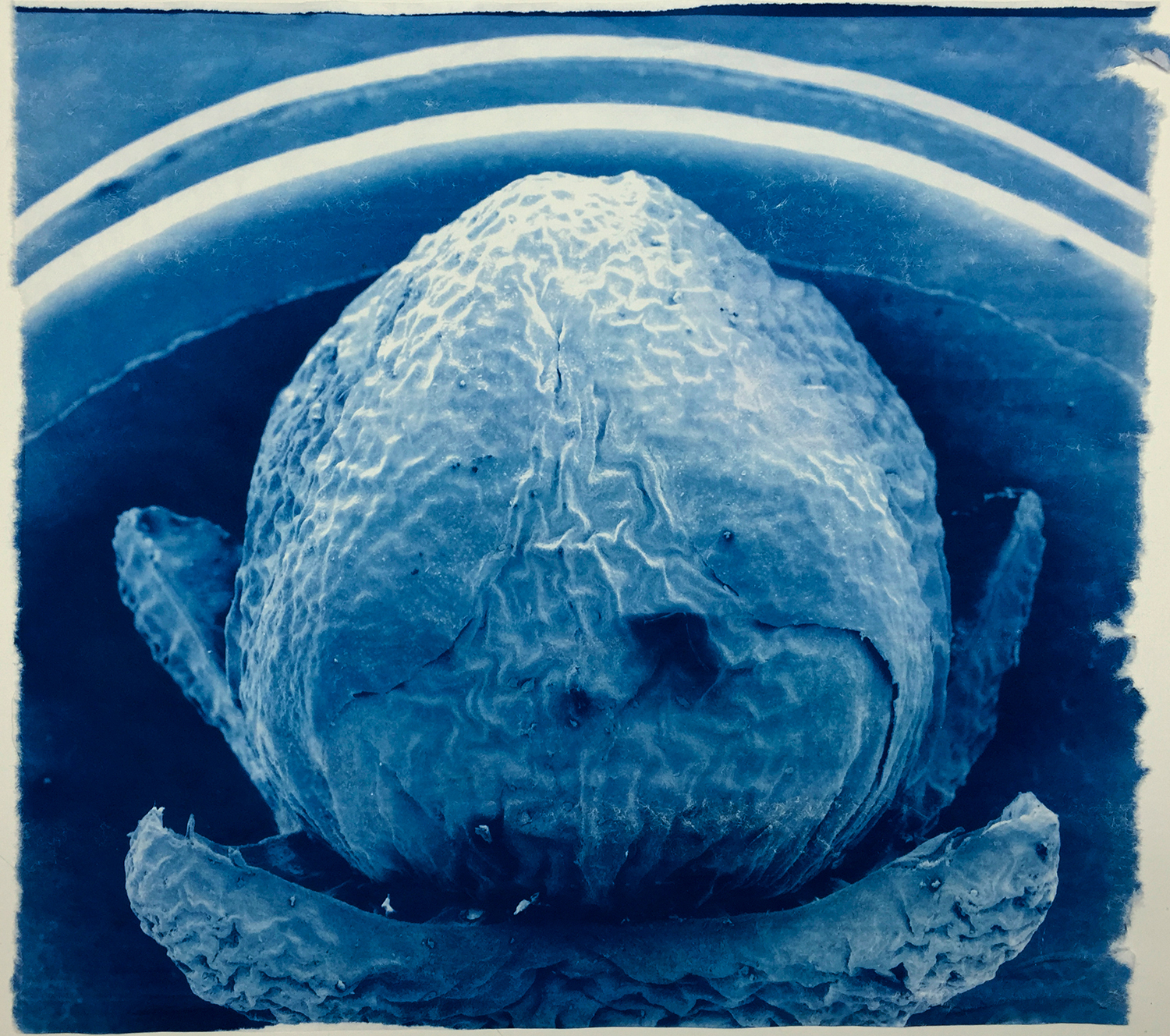
Earlier this month, I finished taking a 1-credit course on Elementary Scanning Electron Microscopy. As the professor suggested early on, the semester flew by and I was left scrambling near the end to find time enough in my schedule to complete my own project. Although initially I had hoped to create albumen stereographs of microscopic plant life, I got drawn into my work with my cyanoptypes on washi. Rather than stressing myself out in what was intended to be a fun course, I continued to dive deeper into my exploration of my wife’s spice rack.
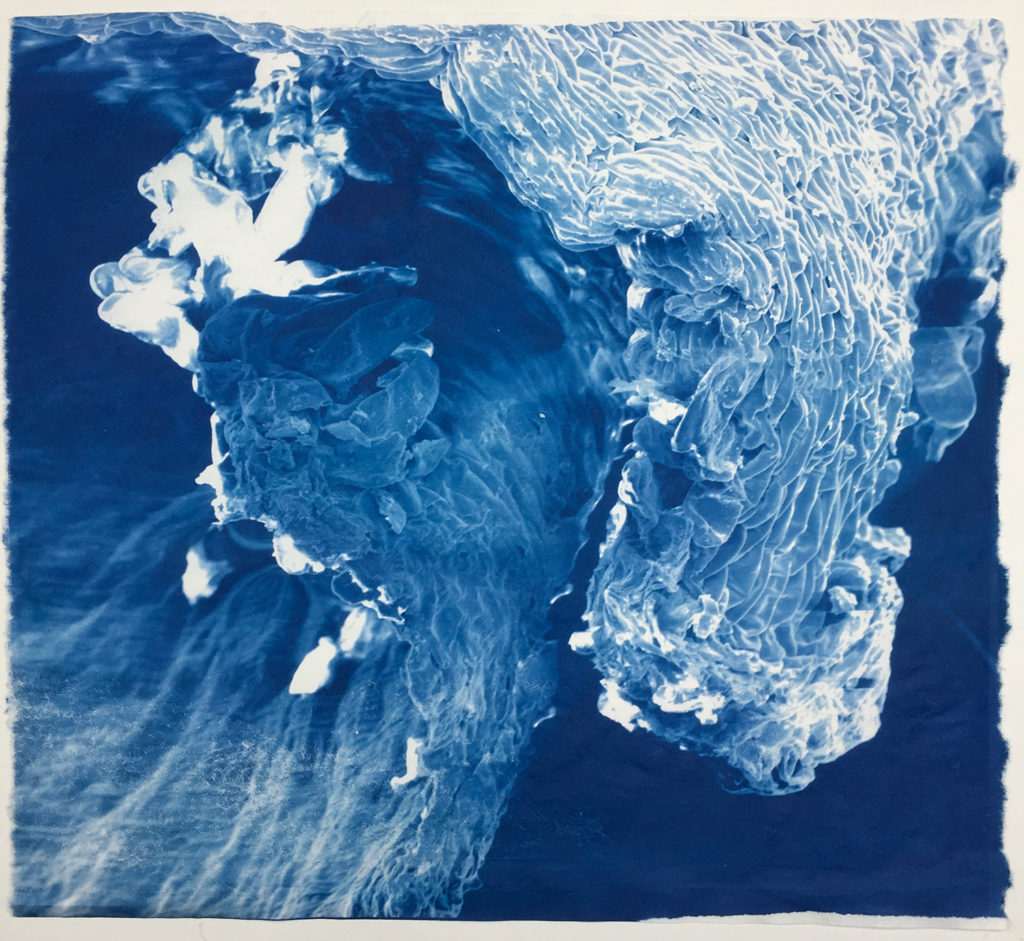
After working out the kinks earlier this spring, printing these final few images was a delight. My coating process has been greatly improved on this specific type of washi, a cheap “test” paper that proved to be more cumbersome than I initially expected. In future, I will certainly use my resources to choose a better quality washi, but it was still fun to test this one.
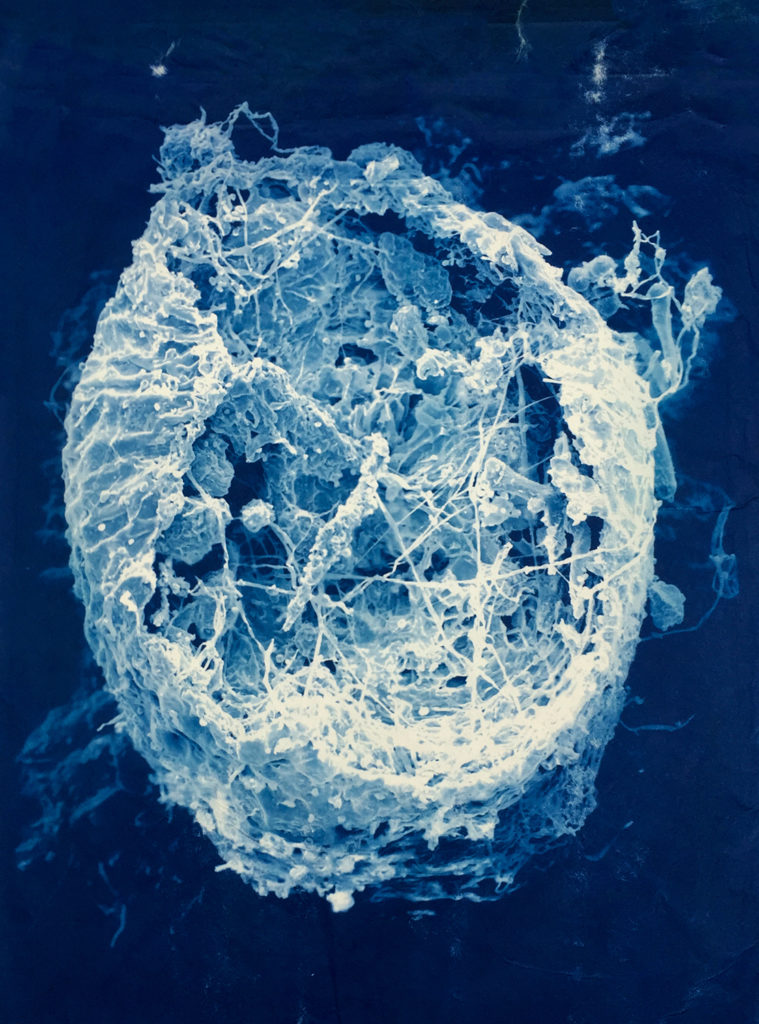
I also ironed out some issues with cyanotype processing on the washi, thanks to my wife purchasing a screen printing kit some months back. When wet, the water adds enough weight to the paper to cause it to immediately tear if it is processed in a standard tray. By supporting the unwashed print with the screen from behind and then pouring water down the length of the print, tearing was greatly reduced. Leaving the print to dry on the screen support also helped. Ironing the print after drying also helped eliminate any wrinkles caused by the processing.
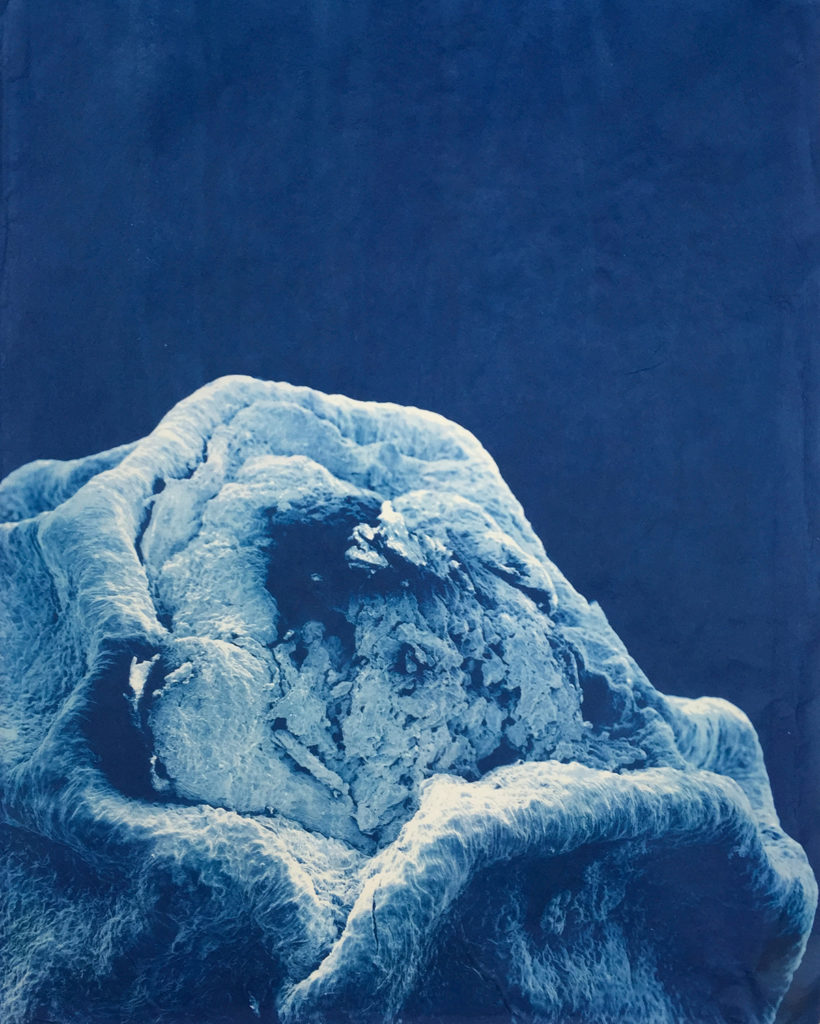
In the end, I feel that I only scratched the surface on what I wanted to do in this course. I look forward to the opportunity to take it again next spring, hopefully coming out with work that is even more challenging.
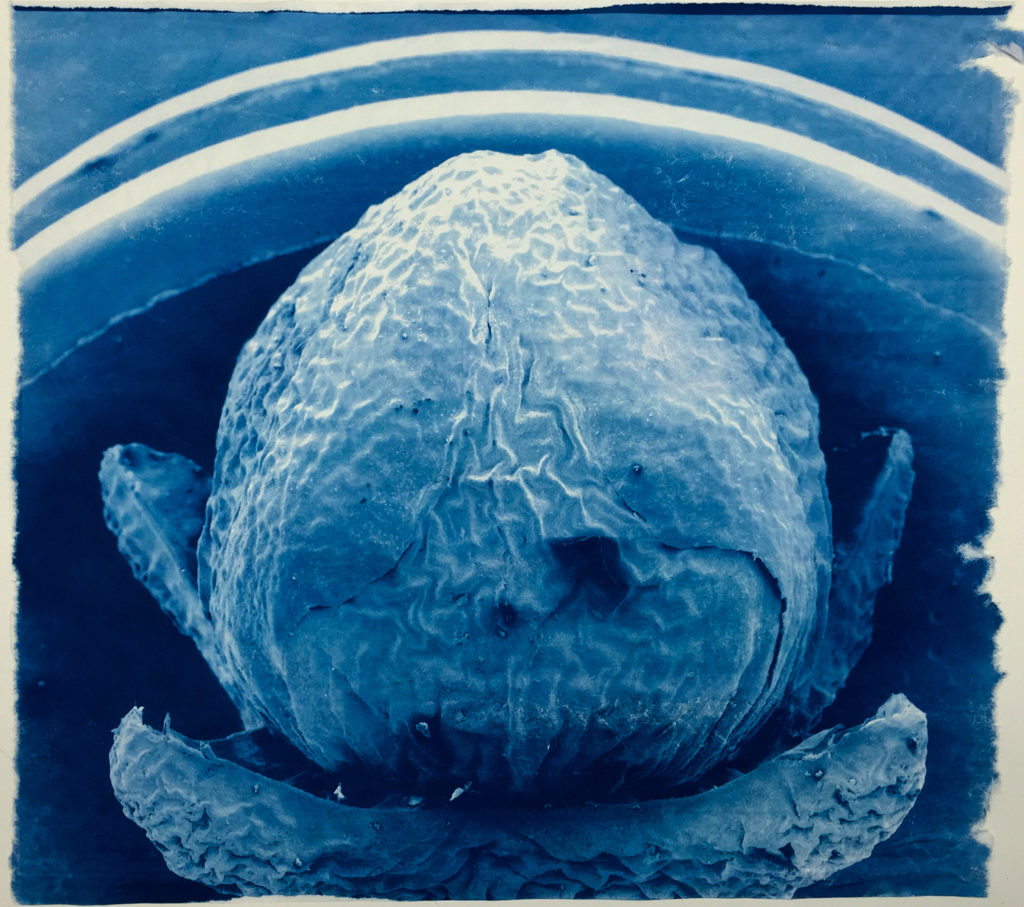
I love that nature on all scales is a rich source for abstraction as shown in your wonderful project.
Thanks so much, John. It certainly has given me a greater appreciation for the hidden worlds all around us.
This work is so exciting! It’s early July, and I’m watching cottonwood fluffs drifting by on the wind and wondering how they might work for SEM cyanotypes. Also, some of the dead mosquito bodies that are everywhere in our cabin after being zapped by an electric racket! THAT would be sweet revenge for the havoc mosquitoes wreak on us in early summer!
Thanks so much, Sine! Objects placed in the SEM have to be completely dried and then coated (using another machine) with Iridium, so the mosquito is definitely a possibility but I’m worried that the cottonwood / popular fluffs would go all over the place! They have to be coated in Iridium because of how the SEM reads the sample. You’re technically not taking a “picture” at high magnification, but actually making a visual readout of the electrons as they bounce off of the coating. It’s crazy science but really awe-inspiring.